
I Tried Fishing Game 98VV – Here’s What Actually Kept Me Playing
I didn’t expect to spend more than a few minutes playing. I was just looking for something quick and simple when I came across a fishing game 98VV. At first, it felt more like a casual arcade than a typical casino experience—no complicated setup, no waiting, just instant action. But what caught me off guard wasn’t the gameplay itself. It was how easily I lost track of time. According to Statista 2025, interactive formats like fish shooting have grown over 27% year-over-year, largely because players prefer active engagement—and after one session, I completely understood why.
The First Few Minutes Felt Too Easy
The moment I entered the game, everything felt intuitive.
- Move → aim → shoot
- Immediate feedback
- No learning curve
There was no pause, no waiting for results like in slot games. Everything happened in real time. I wasn’t just clicking and hoping—I was actively choosing targets, adjusting my aim, and reacting instantly.
That’s what made it feel different.
In a typical session, especially in a fish shooting game 98VV, every action creates a response. Even though the system still runs on probability, it gives you the feeling that your timing and decisions actually matter.
And that feeling is what pulls you in.
Because when it feels like you’re in control, you naturally want to keep going.
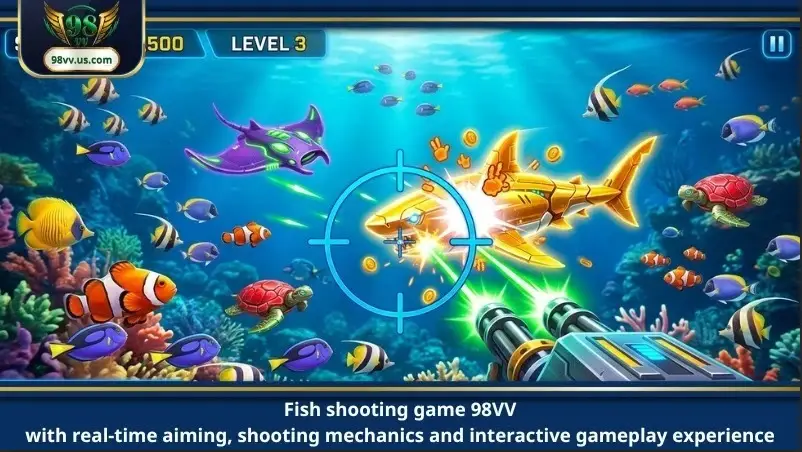
A player actively aiming and shooting at moving fish targets in a colorful underwater environment, highlighting real-time interaction and fast response gameplay typical of modern fish shooting systems.
I Lost Track of Time Without Realizing
After a while, I noticed something strange.
I wasn’t thinking about winning or losing anymore—I was just playing.
There was always something moving on the screen. Targets appeared continuously, and each shot felt like part of a flow rather than a separate decision. I didn’t stop to calculate anything—I just kept reacting.
That’s when time started to disappear.
According to DataReportal 2026:
- Interactive formats increase session time by +35%
- Players are 2x more likely to continue playing compared to passive games
Looking back, it made perfect sense.
A bắn cá 98vv doesn’t feel like placing bets one by one. It feels like continuous movement, where one action leads directly into the next. There’s no natural “stop point,” which makes it much easier to stay longer than you intended.
The Moment Things Started Going Wrong
At some point, the rhythm changed.
I started missing more targets. Not dramatically—but just enough to notice.
So I reacted the way most players do.
I increased my bullet size.
It felt logical at the time:
→ bigger shots = better results
But what actually happened was very different.
My balance started dropping faster. Each miss cost more. And because I was already losing, I felt pressure to recover quickly.
According to DataReportal 2026:
- Over 40% of players increase bet intensity after losing
- This behavior is directly linked to faster bankroll depletion
That moment made me realize something important.
Even in a fish shooting game 98VV, the system doesn’t adjust to your situation. It doesn’t reward you for increasing risk, and it doesn’t compensate for losses.
The only thing changing in that moment… was me.
What I Changed After That
Instead of trying to win faster, I tried to lose slower.
That shift sounds small—but it completely changed how I played.
I started doing a few things differently:
- I kept my bullet level consistent instead of reacting to losses
- I focused on smaller, easier targets instead of chasing big ones
- I set a limit before I even started playing
At first, it felt slower.
Less exciting. Less aggressive.
But after a few sessions, something clicked.
My balance didn’t drop as quickly. I wasn’t constantly trying to recover losses. I could actually follow what was happening instead of reacting to it.
According to Cafebiz 2025:
- Players who apply basic bankroll control reduce losses by up to 40%
That’s when it made sense.
The game didn’t become easier.
I just stopped making it harder for myself.
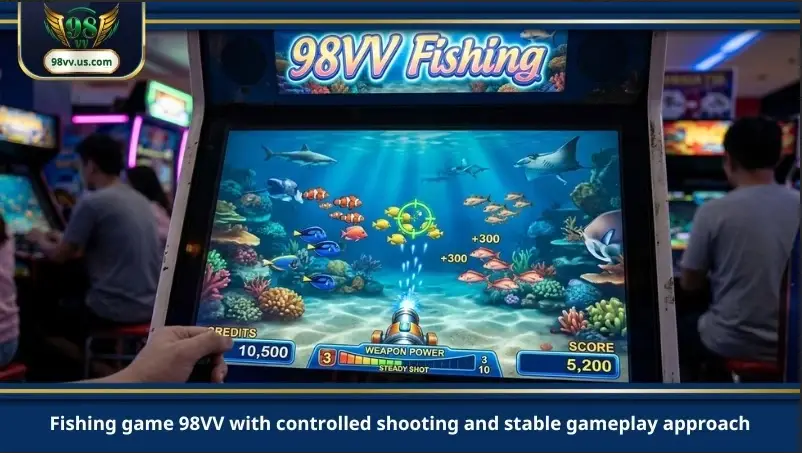 A player focusing on smaller targets with consistent firepower, showing a controlled gameplay strategy.
Why It Still Felt Engaging Even When I Was Losing
This was the part I didn’t expect at all.
Even during losing sessions, I didn’t feel the same frustration I usually felt when playing slots. Normally, losing in a passive game feels like waiting for something that never comes. But here, it felt… different.
I realized why pretty quickly.
Because I was still doing something.
- I was aiming, not just clicking
- I was choosing targets, not waiting for outcomes
- I was adjusting timing, reacting to movement on the screen
There was always a next action to take.
That constant interaction created a sense of involvement. Even when I was losing, I didn’t feel disconnected from the game. I felt engaged—almost like I was still “in control” of something.
That’s the key difference between a passive system and a fishing game 98VV.
In a passive game, you wait and react.
Here, you act continuously—even if the result doesn’t go your way.
And that’s exactly why people keep coming back.
Not because they’re winning—but because they’re involved.
The Platform Experience Made a Difference
After trying similar games elsewhere, I started noticing something subtle.
Not all experiences feel the same—even when the game looks identical.
Here’s what stood out immediately:
- No lag when switching between targets
- Shots registered instantly without delay
- No interruptions breaking the flow mid-session
These details seem small, but they change everything.
When the system responds instantly, your decisions feel sharper. Your timing feels more accurate. You don’t hesitate as much because the game keeps up with you.
On a stable environment like 98VV, the gameplay feels smooth enough that you stop thinking about the system—and start focusing entirely on your actions.
And that creates a very different experience.
It’s important to understand:
→ Stability doesn’t change the math
→ But it changes how you interact with the game
And in the long run, that interaction shapes your behavior more than the probability itself.
What Most Players Get Wrong
Looking back, my mistakes were obvious—but I didn’t see them at the time.
And from what I’ve observed, most players fall into the same patterns:
- Increasing bullet power too quickly after a few losses
- Ignoring smaller targets because they seem “not worth it”
- Playing continuously without setting any stop limit
- Expecting quick wins instead of managing sessions
At the moment, each decision feels reasonable.
But combined together, they create a pattern that leads to faster losses.
What’s interesting is this:
These mistakes don’t come from the game itself.
They come from how we react to it.
That reaction—impulsive, emotional, unplanned—is what drives outcomes over time.
And you’ll see the same behavior in any fishing game 98VV, regardless of where you play.
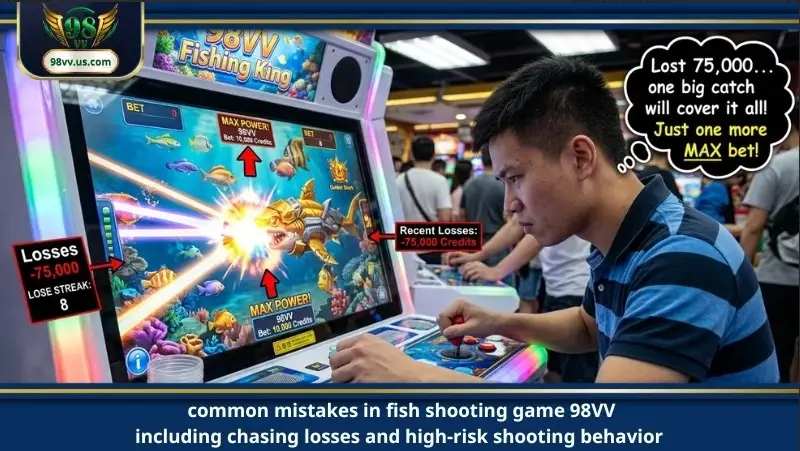 A player increasing firepower after consecutive losses, demonstrating typical behavioral patterns such as chasing losses and making impulsive decisions during gameplay.
What I Took Away From This
If I had to summarize my experience in one sentence:
→ The game didn’t change. I did.
A fishing game 98VV is designed to keep you engaged. That’s its strength.
But whether you stay in control or not—that’s entirely on you.
Conclusion
Trying a fishing game 98VV taught me something I didn’t expect: the biggest factor isn’t luck—it’s behavior. Platforms like 98VV provide a smooth and stable experience, but they don’t change how probability works. Once I stopped chasing outcomes and started controlling my decisions, the experience became completely different. Not easier—but more manageable.